Scottsdale sellers pay a stack of fees and obligations at closing: loan payoffs, title and escrow charges, Maricopa County recording fees, HOA transfer items, property tax proration, any seller concessions, and brokerage commission. Arizona imposes no statewide real estate transfer tax, so your closing costs are built from individual fee categories rather than a single government levy on your sale price. The exact total depends on your loan balance, your HOA, your contract terms, and what you negotiate, which is why a personalized net sheet matters more than any generic estimate.

What does it cost to sell a house in Scottsdale, AZ?
Scottsdale sellers pay a stack of fees and obligations at closing: loan payoffs, title and escrow charges, Maricopa County recording fees, HOA transfer items, property tax proration, any seller concessions, and brokerage commission. Arizona imposes no statewide real estate transfer tax, so your closing costs are built from individual fee categories rather than a single government levy on your sale price. The exact total depends on your loan balance, your HOA, your contract terms, and what you negotiate, which is why a personalized net sheet matters more than any generic estimate.
Every cost category on a Scottsdale seller’s closing statement
Here’s how we walk our clients through the settlement statement before we ever list. Each line item below is a real category you’ll see on your closing disclosure, not a theoretical exercise.
Loan payoffs and lien releases
This is almost always the largest debit on your statement. Your first mortgage, any second mortgage or HELOC, and any recorded liens (judgments, HOA liens, mechanic’s liens) must be paid in full before the buyer receives clear title. The title company orders payoff statements directly from your lenders and handles disbursement at closing.
The payoff amount is whatever your lender says it is: principal balance, accrued interest through the payoff date, and any applicable fees. It’s not negotiable. According to the Arizona Association of REALTORS® standard purchase contract and escrow instructions, the title company is directed to satisfy all recorded liens before the deed transfers. The Maricopa County Recorder requires a recorded release or reconveyance for each deed of trust that’s paid off, so you’ll also see a recording fee for that document on your statement.
Title company and escrow fees
Arizona is a title-escrow state. A licensed title company handles both the title search and the escrow function, coordinating signatures, processing funds, preparing the settlement statement, and disbursing money at closing. Their fees are filed rate schedules, set by the company and regulated by the Arizona Department of Insurance and Financial Institutions.
Two main charges appear here:
- Escrow/settlement fee covers the company’s work managing the transaction from open to close.
- Owner’s title insurance policy protects the buyer against title defects discovered after closing. In many Scottsdale contracts, the seller pays for the owner’s policy as a matter of local custom. That said, this is always negotiable and is spelled out in your purchase contract. The American Land Title Association has a clear overview of how title and escrow practices work in states like Arizona.
Who pays the lender’s title policy (which protects the buyer’s lender) is also contract-dependent, typically a buyer cost in Scottsdale, but not mandated by law.
Recording and government fees
Good news for Scottsdale sellers: according to the Arizona Department of Revenue, Arizona is one of a small number of states with no real estate transfer tax. The National Conference of State Legislatures confirms Arizona’s no-transfer-tax status in its national comparison. Maricopa County likewise imposes no separate transfer tax on residential sales.
What you do pay are the Maricopa County Recorder’s fixed fees to record the warranty deed and any reconveyance documents. These are set by the county fee schedule under Arizona Revised Statutes Title 11, Chapter 4, a flat per-document or per-page charge, the same regardless of your sale price. The title company collects these and remits them to the Recorder.
HOA transfer and disclosure costs
If your Scottsdale home is in a planned community or condominium association (and many are, from DC Ranch and Grayhawk to Optima Kierland and Troon North), expect several HOA-related line items at closing.
Under Arizona Revised Statutes §33-1806 (planned communities) and §33-1243 (condominiums), the HOA must provide a resale disclosure package to the buyer upon request, covering assessments, fees, pending litigation, and other key details. The HOA or its management company is permitted to charge a “reasonable fee” for preparing these documents. You’ll typically see:
- Resale/disclosure package fee charged by the HOA or management company to compile and deliver the required disclosure documents.
- Transfer fee assessed by many Scottsdale HOAs to process the change of ownership in their records.
- Capital contribution, reserve fee, or working capital fee. Some communities charge an incoming-owner contribution at closing; whether this is a buyer or seller cost is set in your contract, not by statute.
The amounts vary significantly by community. A high-amenity master-planned community like Desert Mountain or Silverleaf will have a different fee structure than a smaller townhome complex in Old Town. I always pull the HOA documents early so my clients aren’t surprised by this line on the settlement statement.
Property tax proration
You won’t owe an extra tax because you sold, but you will settle your share of the annual property tax bill as of your closing date. The Maricopa County Treasurer bills property taxes in two installments: the first half is due in October, the second half in March. At closing, escrow prorates the tax between you and the buyer based on how many days each party owned the property during the tax year.
Depending on when you close and whether taxes have already been paid, this proration shows up as either a debit (you owe the buyer your share of an upcoming bill) or a credit (the buyer reimburses you for taxes you’ve already paid). It’s not a fee created by the sale. It’s a settlement of the existing annual obligation.
Seller concessions and buyer credits
If you agreed in the purchase contract to credit the buyer toward their closing costs, prepaid items, or repairs, that amount appears as a debit on your side of the settlement statement. It directly reduces your net proceeds.
Concessions are purely contractual, negotiated case by case and documented in the Arizona Association of REALTORS® purchase contract. One important constraint: lender guidelines cap how much a seller can contribute based on the buyer’s loan type. Fannie Mae’s Selling Guide sets limits for conventional loans, and the HUD FHA Single Family Housing Policy Handbook governs FHA transactions. Even if you and the buyer agree to a larger credit, the lender may not allow it, so the actual deliverable concession must fit within the buyer’s loan program.
We have a separate post that goes deeper on this decision: Should You Pay for Your Buyer’s Closing Costs? What Sellers Need To Know, worth reading before you respond to any offer with a concession request.
Brokerage commission
Commission is paid from your proceeds to the listing brokerage at closing. Per the Arizona Department of Real Estate, commissions are fully negotiable and must be set in a written listing agreement. There is no statutory rate, no standard rate, and no association- or MLS-set minimum. The National Association of REALTORS® and U.S. Department of Justice have both reinforced that commissions are not fixed by any trade group or MLS.
Your listing agreement sets the listing-side fee. Any compensation to a buyer’s agent is a separate, optional decision. It is not automatically included, not required by law, and no longer shared through MLS. How you structure that is a conversation to have with your listing broker before you sign anything.
Miscellaneous seller charges
Depending on your contract, you may also see:
- Home warranty if you offered one as a buyer incentive.
- Termite inspection or treatment if assigned to the seller in the contract (common in Scottsdale).
- Septic certification required for properties on septic systems in areas like Cave Creek or Carefree.
- Any other agreed professional services as specified in the contract as a seller obligation.
What’s fixed by law vs. what you can negotiate
Not every line on your closing statement is up for discussion. Here’s the practical breakdown:
| Cost Category | Fixed or Negotiable? | Who Sets It |
|---|---|---|
| Loan payoff amounts | Fixed (non-negotiable) | Your lender |
| Maricopa County recording fees | Fixed | County fee schedule (ARS Title 11) |
| HOA resale/disclosure package fee | Fixed by HOA governing docs | HOA board (subject to ARS §33-1806/1243 “reasonable fee” standard) |
| Property tax proration | Fixed to closing date; method negotiable | Maricopa County tax calendar + contract proration formula |
| Lead-based paint disclosure (pre-1978 homes) | Federally required | EPA / Title X |
| Owner’s title insurance / escrow fee | Negotiable (who pays) | Purchase contract / local custom |
| HOA transfer fee / capital contribution | Negotiable (who pays) | Purchase contract |
| Seller concessions / buyer credits | Negotiable | Purchase contract (subject to lender limits) |
| Brokerage commission | Negotiable | Listing agreement |
| Home warranty, termite, other services | Negotiable | Purchase contract |
One thing we emphasize with every seller: the items in the “fixed” column are obligations you can’t negotiate away. Clear title is non-negotiable. Lien payoffs are non-negotiable. Federal disclosure requirements are non-negotiable. The negotiable items are where a good agent earns their keep, structuring the contract so you’re not absorbing costs that could reasonably shift to the buyer.
Disclosures Scottsdale sellers must provide
Arizona Seller’s Property Disclosure Statement (SPDS)
In virtually every Scottsdale REALTOR®-assisted transaction, you’ll complete a Residential Seller’s Property Disclosure Statement (SPDS), a standardized form published by the Arizona Association of REALTORS®. It covers structural components, utilities, roof, HVAC, pool and spa, pest issues, environmental conditions, HOA information, and any known defects or prior repairs.
The SPDS is delivered to the buyer as soon as practicable, often before or at contract acceptance. It’s not a substitute for buyer inspections, but it is your written record of what you disclosed. The NAR Consumer Guide on Seller Disclosures is a good overview of why these forms matter and how buyers rely on them.
Lead-based paint disclosure
If your home was built before 1978, federal law under the Residential Lead-Based Paint Hazard Reduction Act requires a separate disclosure form, an EPA-approved lead hazard information pamphlet, and a 10-day buyer inspection period (unless waived in writing). This applies everywhere in the U.S., including Scottsdale. Older homes in areas like Old Town Scottsdale or established North Scottsdale neighborhoods may trigger this requirement.
For a broader look at how the Scottsdale market is performing as you think through timing your sale, the Scottsdale single-family home sales report for June 2026 has the most current data available.
Frequently Asked Questions
What closing costs does the seller pay when selling a house in Scottsdale, AZ?
Scottsdale sellers typically pay for loan payoffs, their share of title and escrow fees, Maricopa County recording fees, HOA transfer and disclosure package fees (if applicable), property tax proration, any agreed buyer concessions, and brokerage commission. Arizona has no statewide real estate transfer tax, so there’s no percentage-based government levy on your sale price. The exact allocation of title, escrow, and HOA costs depends on what’s negotiated in your purchase contract.
Who pays title and escrow fees in a Scottsdale home sale, the buyer or the seller?
There’s no Arizona law that mandates one party pay title and escrow fees. It’s determined by the purchase contract and local custom. In many Scottsdale transactions, the seller pays for the owner’s title insurance policy as a matter of practice, but this is always negotiable. Escrow fees are sometimes split between buyer and seller, or allocated entirely to one party depending on what’s agreed in the contract. Your agent should walk you through local norms before you make that call.
What is the SPDS in Arizona and when do I have to provide it?
The Residential Seller’s Property Disclosure Statement (SPDS) is a standardized form published by the Arizona Association of REALTORS® that requires sellers of 1-4 unit residential properties to disclose known material facts about the home: structural issues, utilities, HOA details, prior repairs, environmental conditions, and more. In REALTOR®-assisted Scottsdale transactions, it’s typically delivered to the buyer as soon as practicable, often before or at contract acceptance. It’s not a substitute for inspections, but it is a legally significant document. Answer it carefully and honestly.
Are there transfer taxes or city fees when I sell my house in Scottsdale?
No. The Arizona Department of Revenue confirms that Arizona does not impose a statewide real estate transfer tax, and Maricopa County (which includes Scottsdale) has no separate county transfer tax on residential sales. The government fees you’ll see at closing are Maricopa County Recorder fees to record the deed and any lien releases. These are flat per-document charges, not a percentage of your sale price.
What HOA fees should I expect at closing for a Scottsdale condo or townhome?
If your property is in an HOA (which covers most condos, townhomes, and many single-family communities in Scottsdale), expect a resale/disclosure package fee (charged by the HOA or its management company to prepare the required disclosures under ARS §33-1806 or §33-1243), a transfer fee, and possibly a capital contribution or working capital fee. The amounts vary by community and are set by the HOA’s governing documents, not by state law. Who pays each item is negotiated in the purchase contract.
How are property taxes prorated at closing in Maricopa County?
Maricopa County bills property taxes in two installments: the first half due in October, the second half due in March. At closing, the title company prorates the annual tax bill between buyer and seller based on the closing date, so each party pays only for the days they owned the property during that tax year. Depending on timing, this shows up as either a seller debit (you owe the buyer your unpaid share) or a seller credit (the buyer reimburses you for taxes already paid). It’s not an extra fee created by the sale.
Can Scottsdale sellers give credits toward the buyer’s closing costs, and how does that affect my net proceeds?
Yes. Seller concessions are common in Scottsdale and are negotiated in the purchase contract as either a dollar amount or a percentage. They appear as a debit on your settlement statement and reduce your net proceeds dollar for dollar. One important constraint: lender guidelines cap the maximum concession based on loan type (conventional, FHA, VA) and occupancy, so the agreed credit must fit within the buyer’s loan program to be deliverable. We cover this in detail in Should You Pay for Your Buyer’s Closing Costs?
Understanding what’s on your closing statement before you list is how you avoid surprises on settlement day. Every category above is real, every one of them affects your net, and several of them are negotiable, which means how your contract is written matters.
When you’re ready to see what your specific home would net in today’s Scottsdale market, we’ll put together a personalized net sheet that accounts for your loan balance, your HOA, and current market conditions. Reach out to schedule a seller consultation and we’ll build your numbers together.
Disclaimer: Equal Housing Opportunity. This article is provided for general informational purposes only and does not constitute legal, tax, or financial advice. Closing costs, tax obligations, and contract terms vary by transaction. Confirm your specific numbers with your attorney, tax advisor, lender, or escrow/closing officer before making any financial decisions.


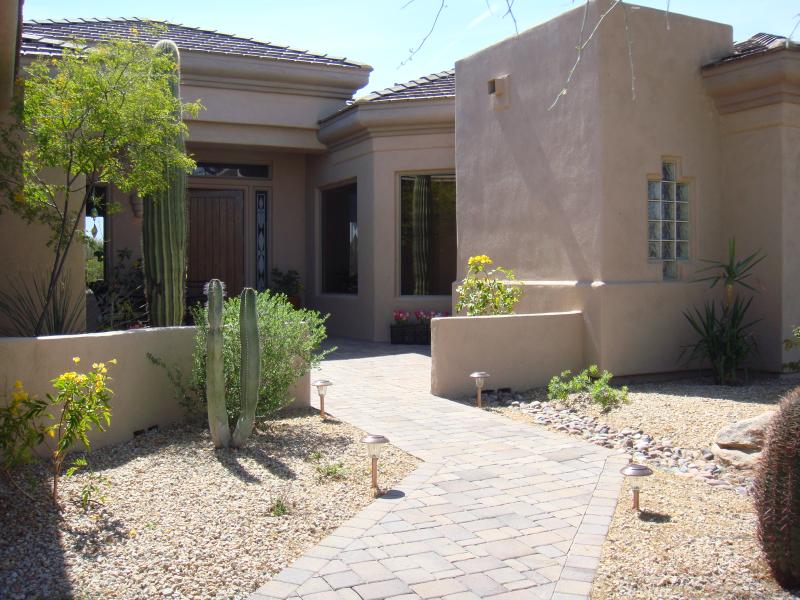

[…] a full picture of what you’ll see on the settlement statement at closing, our post on seller closing costs in Scottsdale breaks down each cost category in […]