Scottsdale offers distinct lifestyle zones: Old Town for walkable urban energy, Central Scottsdale for a balanced suburban feel, and North Scottsdale for gated golf and luxury desert living. The right community depends on your commute, amenity priorities, density preference, and whether you want a resort atmosphere or quiet retreat.
Which Scottsdale community is the best fit for your lifestyle?
The right Scottsdale community depends on how you want to live day to day, not just what the home looks like. Old Town and nearby neighborhoods offer walkable urban energy, arts, and nightlife. Central Scottsdale delivers a balanced suburban feel with greenbelts, lakes, and freeway access. North Scottsdale, including communities like DC Ranch, Desert Mountain, Troon North, and Silverleaf, is built around gated privacy, golf, and luxury desert living. Each zone comes with real trade-offs in density, commute, and atmosphere that are worth understanding before you start touring homes.
Key Takeaways
- Scottsdale’s median age is close to 50, according to city demographic data, making it one of the most mature lifestyle markets in the Phoenix metro.
- Old Town Scottsdale averages roughly 4,200 residents per square mile, while North Scottsdale averages closer to 340, so the density difference between these two zones is dramatic.
- The most recent official tourism data (calendar year 2023) shows Scottsdale hosted 4.8 million domestic overnight visitors, which directly shapes the feel of resort-adjacent neighborhoods during peak season.
- The median sale price in nearby Paradise Valley reached $3,995,875 in the trailing 90 days through September 2026, with DC Ranch at $3,637,500, reflecting the premium attached to Scottsdale’s luxury desert communities.
- About 169,000 workers enter Scottsdale daily while only 32,000 residents both live and work in the city, so commute direction matters when choosing a neighborhood.
How do Old Town, Central Scottsdale, and North Scottsdale actually differ?
This is the first question we ask every relocating or second home buyer who calls me. The three zones feel like different cities, and the gap is widest between Old Town and North Scottsdale.
Old Town and Downtown Scottsdale: urban energy and walkability
Old Town is Scottsdale’s highest-density corridor, with roughly 4,200 residents per square mile according to DataCommons population estimates. You’re looking at condos, lofts, townhomes, and mixed-use buildings within walking distance of galleries, restaurants, and major events like the Scottsdale Arts Festival and the Parada del Sol parade.
The trade-off is real. Tourism shapes this neighborhood in ways that are easy to underestimate. According to the City of Scottsdale Visitor Statistics Report (September 2024, covering calendar year 2023), Scottsdale hosted 4.8 million domestic overnight visitors and 1.5 million international overnight visitors in 2023, with roughly 87% of domestic overnight visitors staying in a resort, hotel, or motel. A significant share of that activity concentrates around Old Town. Late winter and spring, when art shows and spring training bring peak visitor traffic, the neighborhood buzzes with transient energy. That’s a feature for some buyers and a deal-breaker for others.
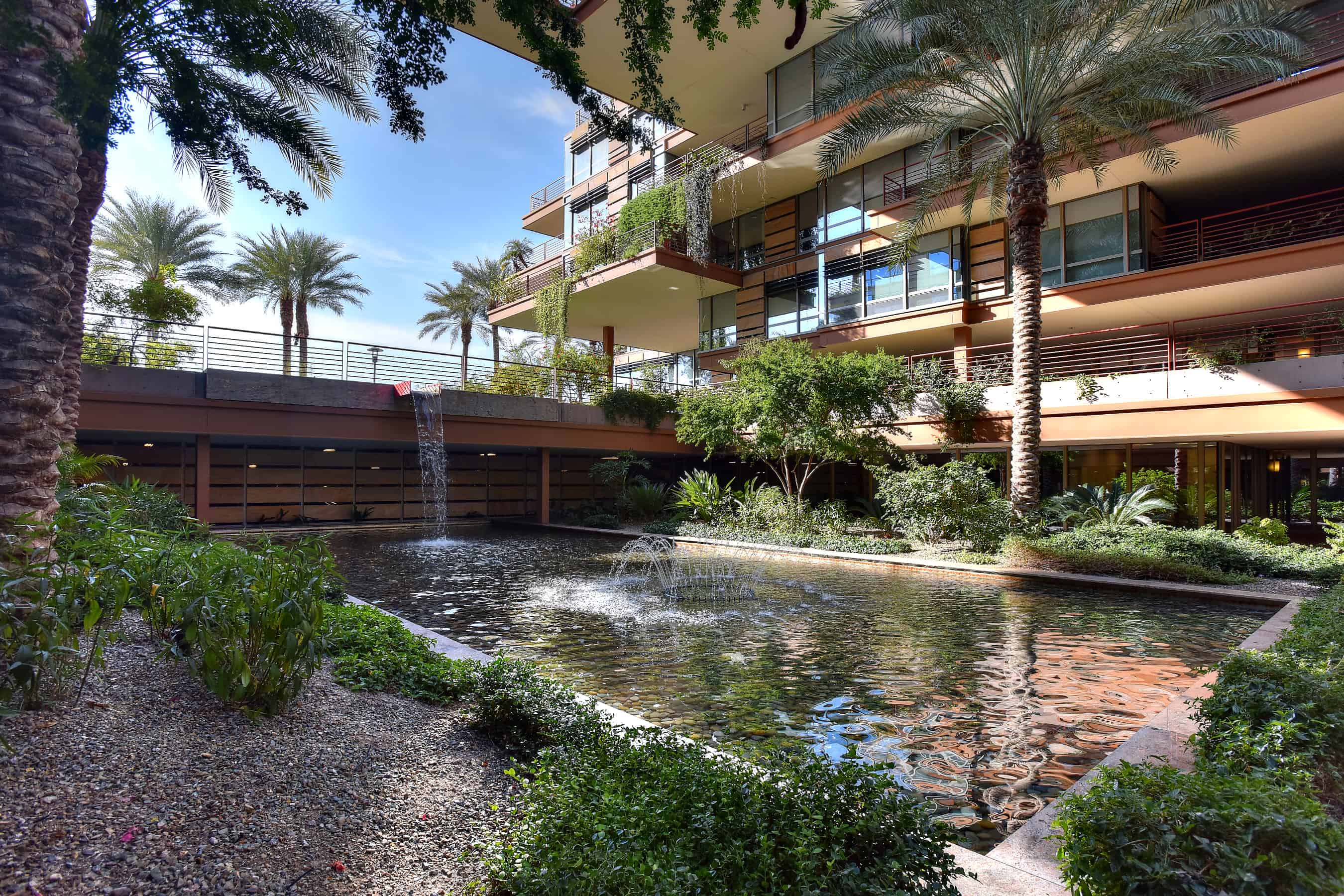
If you want walkable access to Scottsdale’s arts and dining scene, Old Town and nearby communities like Optima Kierland and Scottsdale Quarter deliver that. If you want quiet evenings and a private backyard, keep reading.
Central Scottsdale – The balanced middle ground
Central Scottsdale, including established master-planned communities and the McCormick Ranch and Scottsdale Ranch corridors, sits between the two extremes. You get mature landscaping, greenbelts, lakes, and bike paths alongside single-family homes and townhomes at a scale that feels suburban without feeling remote.
The Loop 101 runs through this zone, which matters if you commute. The City of Scottsdale’s economic demographics report notes that roughly 169,000 workers enter Scottsdale daily while only about 32,000 residents both live and work in the city. Central Scottsdale generally offers the most direct freeway access for cross-metro commutes to Phoenix, Tempe, or Chandler.
These Central Scottsdale locations tend to attract professionals and households that want proximity to good retail and employment centers without giving up a yard and a quiet street. The housing stock here reflects Scottsdale’s overall median year built of around 1990, according to Point2Homes Scottsdale demographic data, so you’re typically looking at established neighborhoods with mature desert landscaping rather than brand-new construction.
If you’re looking for a walkable area, Kierland and Scottsdale Quarter might be an option. Both offer great shopping, dining, and entertainment.
North Scottsdale -Gated, golf-oriented, and luxury desert living
North Scottsdale is where the density drops to roughly 340 residents per square mile and the lot sizes, gates, and golf courses take over. Communities like Desert Mountain, Desert Highlands, Silverleaf, Whisper Rock, Mirabel, Estancia, Troon North, Troon Village, and DC Ranch are built around a lifestyle of privacy, desert scenery, and resort-caliber amenities.
The numbers reflect the premium. In the trailing 90 days through September 2026, the median sale price in DC Ranch it came in at $3,637,500, with median days on market of 55.
These are general figures to provide insight. An individual home’s value varies by condition, street, view, and lot size, so treat these as directional benchmarks rather than appraisals.
The trade-off in North Scottsdale is commute and walkability. If your job is in Downtown Phoenix or the East Valley, you’re adding real drive time each way. The Loop 101 and Pima Road corridors help, but there’s no shortcut to the fact that you’re farther out. For buyers whose lifestyle is built around the community itself, whether that’s golf, hiking, or a quiet home office, that trade-off is worth it. For buyers who need to be in central Phoenix by 8 a.m. every day, it’s worth running the math before you fall in love with a Troon address.
We always tell clients the community you choose matters as much, if not more, as the home itself. A gorgeous house in the wrong zone for your daily life gets old fast.
What else should you weigh before choosing a Scottsdale community?
Scottsdale’s overall market context in 2026
Scottsdale’s population sits around 244,800 as of the most recent estimates, according to DataCommons, with a median age close to 50 per city demographic reports. That’s significantly older than the U.S. median age of roughly 38-39, which tells you something important: Scottsdale is a lifestyle-driven market, not a starter-home market. The U.S. Census Bureau QuickFacts for Scottsdale shows that 97.5% of residents 25 and older have a high school diploma or higher, and average household income runs around $168,000 per Point2Homes demographic data.
Buyers here tend to be deliberate. They’re choosing Scottsdale for a reason, and the community choice is usually about lifestyle fit, not just price per square foot. If you want a broader look at where the Scottsdale market stands heading into fall 2026, we covered that in detail in What’s Happening in Scottsdale Real Estate Right Now.
Snowbirds, second homes, and seasonal considerations
A large share of Scottsdale buyers are part-time residents, and that shapes community selection in ways that you might not find in a standard neighborhood search. Resort-adjacent communities near Old Town and North Scottsdale golf enclaves both attract seasonal buyers, but the experience is different. Old Town is energized by the tourist season and North Scottsdale golf communities tend to attract snowbirds who want quiet and privacy during their months here.
If you’re a snowbird or planning a second home, ask specifically about HOA rental policies, short-term rental rules, and how many owners are year-round versus seasonal in any community you’re considering. Those dynamics affect everything from neighbor relationships to resale liquidity.
Lifestyle fit is personal, and the right answer isn’t obvious
Not every Scottsdale buyer needs a golf membership or a gated address. We’ve worked with buyers who assumed North Scottsdale was the obvious choice and ended up loving the walkability of Old Town. We’ve also worked with buyers who thought they wanted urban energy and realized after a few open houses that they needed space and quiet to decompress after work or a long day.
Your specific fit depends on how you actually live, not just what sounds appealing in a description. That’s where a conversation with someone who knows these communities from the inside makes a real difference. If you’re still working through the financial side of the decision, the post on how much cash you need to buy in Scottsdale is a good companion read.
FAQ: Scottsdale Community and Lifestyle Questions
What’s the difference between Old Town Scottsdale, Central Scottsdale, and North Scottsdale when it comes to lifestyle?
Old Town is Scottsdale’s most walkable, highest-density zone, built around arts, dining, and nightlife, with condos and mixed-use buildings as the dominant housing type. Central Scottsdale offers established master-planned neighborhoods with greenbelts and lakes, better freeway access, and a quieter suburban feel. North Scottsdale is the most spread out, with gated golf communities, large lots, and luxury desert living, but longer commutes to central Phoenix employment centers.
Which Scottsdale neighborhoods are best for walkable nightlife, restaurants, and arts?
Old Town Scottsdale is the clear answer for buyers who prioritize walkability to restaurants, galleries, and events. Communities like Scottsdale Waterfront and Optima Camelview offer condo and urban-style living close to that energy. Keep in mind that peak visitor season (late winter through spring) brings significant tourist traffic to this corridor, which shapes the day-to-day atmosphere.
Where should I look in Scottsdale if I want a low-maintenance home near golf courses?
North Scottsdale has the highest concentration of golf-oriented communities, including Troon North, Troon Village, Desert Mountain, Desert Highlands, Mirabel, Estancia, DC Ranch, and Whisper Rock. Many of these are gated with HOA-managed common areas, which reduces exterior maintenance significantly.
How does living in North Scottsdale compare to Old Town in terms of commute and daily errands?
North Scottsdale offers far more space and privacy but less walkability for everyday errands, and commutes to Downtown Phoenix or the East Valley are noticeably longer than from Old Town or Central Scottsdale. The Loop 101 and Pima Road corridors help, but buyers who commute daily to central Phoenix should factor in realistic drive times before committing to a North Scottsdale address. Old Town, by contrast, has better transit and rideshare availability but faces event-driven congestion during peak season. Regardless, whatever area you pick, there are always going to be several options for dining, shopping, and entertainment nearby.
Is Scottsdale more expensive than other parts of the Phoenix metro?
Yes, across most price tiers. Scottsdale’s average household income runs around $168,000 compared with lower Maricopa County averages, and housing costs reflect that premium. The most recent data from the trailing 90 days through September 2026 shows median sale prices of $3,637,500 in DC Ranch. More affordable entry points exist in Central Scottsdale and some Cave Creek and Carefree communities, but Scottsdale broadly commands a premium over the wider metro for comparable square footage.
Ready to figure out which Scottsdale community actually fits how you live? We walk every buyer through this conversation before we start touring, because the right neighborhood makes the right home even better. Reach out to schedule a consultation and let’s map out the communities that match your lifestyle, commute, and budget.



Leave a Reply